
🌟 Introduction
Financial markets are often perceived as complex, chaotic, and driven by economic data, corporate results, and investor sentiment. But what if there’s a deeper, cosmic rhythm behind all this chaos? What if the planets in the sky influence not just our personal lives but also the stock market, commodity prices, inflation, and global economies?
This idea is not a fantasy—it is financial astrology, an ancient science that examines how planetary movements impact financial markets.
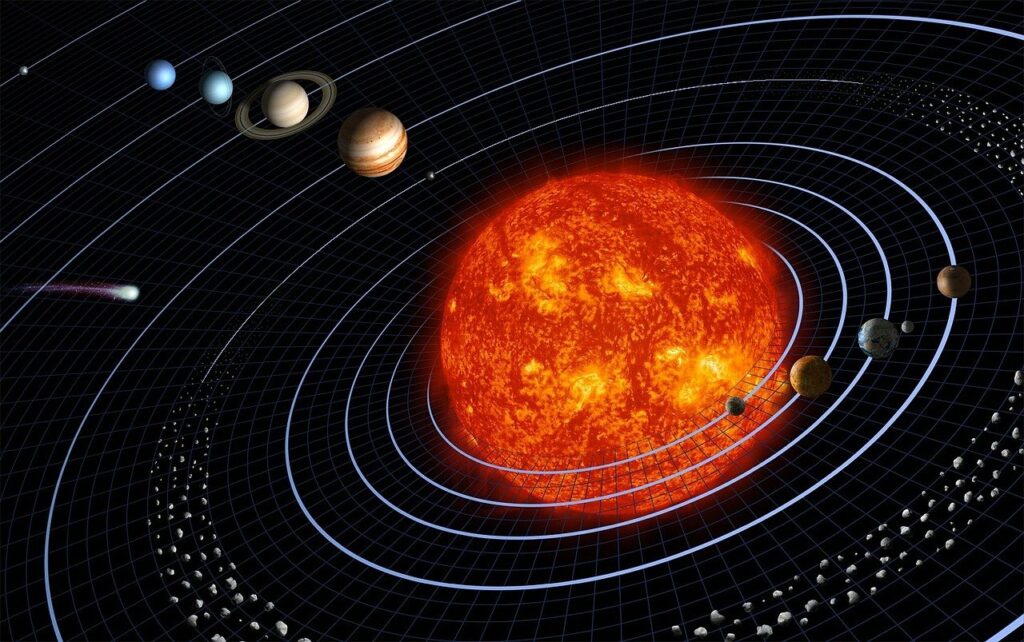
In this detailed article, we will explore the role of each planet in financial astrology. You’ll learn how planets affect different sectors, emotions, and economic indicators—and why traders who understand planetary influences can predict market movements with amazing accuracy.
Whether you’re a complete beginner or a curious trader, this is a vital step in understanding how astro-economics works.
🔭 Why Planets Matter in Financial Astrology
In astrology, planets are considered cosmic agents that carry specific energies. These energies influence human behavior, global events, and psychological patterns—including investor sentiment and economic trends.
Markets are not just numbers. They are living systems powered by human emotions—greed, fear, optimism, panic. Since planets influence these emotions, they indirectly shape market trends.
Each planet has:
- A specific role in finance (e.g., Venus = value, Mercury = trade)
- A corresponding sector (e.g., Saturn = mining, Mars = defense)
- A psychological effect on investor mood
- Timing influence through transits, aspects, and retrogrades
Let’s now explore each planet and its connection to the financial world.

☿ Mercury – The Planet of Trade, Communication & Speed
Financial Role:
- Represents trading, speculation, communication, data, analysis
- Strong influence on intraday trading, news-based volatility, and stock exchanges
- Mercury rules over brokers, analysts, IT stocks, and financial journalism
Market Influence:
- When Mercury is strong or well-placed, markets behave rationally, with efficient data-driven moves.
- When Mercury is retrograde, expect confusion, miscommunication, false signals, and increased volatility.
- Mercury transits often trigger short-term reversals or breakout moves, especially in combination with the Moon or Venus.
Mercury Rules:
- Sectors: Telecom, IT, Media, Transportation, Courier Services, Stock Exchanges
- Commodities: Grain, Wheat, Cotton
- Investor Psychology: Quick decision-making, information processing, overthinking
♀ Venus – The Planet of Wealth, Luxury & Value
Financial Role:
- Venus represents money, value, comfort, luxury, fashion, and beauty.
- It governs wealth preservation, financial stability, and is important for bull market growth.
Market Influence:
- When Venus is strong or in harmony, bullish sentiment often prevails.
- Venus retrograde or in tough aspects leads to overvaluation, corrections, or market bubbles.
- Venus has a significant influence on consumer confidence, spending behavior, and sales of luxury goods.
Venus Rules:
- Sectors: Fashion, Jewelry, Cosmetics, Real Estate, Entertainment, Automobiles, Hospitality
- Commodities: Silver, Sugar, Perfume, Flowers
- Investor Psychology: Comfort-seeking, risk-averse, emotional stability
♂ Mars – The Planet of Action, Aggression & Risk
Financial Role:
- Mars is the planet of energy, aggression, war, and forceful action.
- It represents risk-taking behavior, defense stocks, and sharp market moves.
Market Influence:
- A strong Mars transit can trigger breakouts, rallies, or market crashes.
- Mars conjunctions or squares with malefic planets (like Saturn or Pluto) can cause violent market reactions.
- It affects military budgets, defense stocks, crude oil prices, and conflict-driven markets.
Mars Rules:
- Sectors: Defense, Oil & Gas, Iron & Steel, Construction, Police, Chemicals
- Commodities: Iron, Red Chilies, Onion, Alcohol, Petroleum
- Investor Psychology: Bold, aggressive, impulsive, high-risk takers
♃ Jupiter – The Planet of Expansion, Prosperity & Long-Term Trends
Financial Role:
- Jupiter is the planet of growth, optimism, wealth, wisdom, and long-term investing.
- It governs macroeconomic cycles, bull markets, and corporate earnings expansion.
Market Influence:
- Jupiter transits indicate major bull runs, government policy boosts, and investor confidence.
- Retrograde Jupiter or hard aspects can lead to over-optimism, market bubbles, or regulatory setbacks.
- Jupiter conjunction with Saturn often indicates economic restructuring or global financial shifts.
Jupiter Rules:
- Sectors: Banking, Education, Law, Insurance, Mutual Funds, Consulting
- Commodities: Gold, Turmeric, Banana, Saffron, Wheat
- Investor Psychology: Optimistic, long-term oriented, trust in institutions
♄ Saturn – The Planet of Discipline, Structure & Bear Markets
Financial Role:
- Saturn represents limitations, discipline, structure, delay, and karma.
- It governs long-term cycles, economic slowdowns, taxation, and market corrections.
Market Influence:
- When Saturn is strong or positively aspected, markets become disciplined and trend-bound.
- Saturn retrograde or in affliction triggers sharp corrections, crashes, and fear-based panic selling.
- Saturn return cycles (around every 29 years) have coincided with recessions and structural economic changes.
Saturn Rules:
- Sectors: Real Estate, Cement, Mining, Government, Public Sector, Judiciary, Labor
- Commodities: Coal, Salt, Black Sesame, Leather
- Investor Psychology: Cautious, disciplined, fear-driven, value-seeking
☽ Moon – The Planet of Emotion, Public Sentiment & Volatility
Financial Role:
- Moon controls emotions, public mood, liquidity, and daily price swings.
- It is the key planet in intraday trading and short-term sentiment shifts.
Market Influence:
- Full Moon and New Moon often coincide with market tops or bottoms.
- The moon changes signs every 2.5 days, influencing sector rotation.
- Eclipses and Moon’s nakshatra positions cause sudden volatility or trend reversals.
Moon Rules:
- Sectors: Dairy, FMCG, Hospitality, Food Processing, Public Sector, Water-related businesses
- Commodities: Milk, Rice, Water, Pearl, Silver
- Investor Psychology: Emotional, instinctive, reactive, crowd behavior
☉ Sun – The Planet of Power, Leadership & Authority
Financial Role:
- The sun represents governments, leadership, ego, fame, and public image.
- It governs policy changes, taxation, and market direction set by governments.
Market Influence:
- Sun transits signal changes in market leadership, fiscal policy, and government actions.
- Eclipses involving the Sun can result in sudden directional shifts in the market.
- The sun is vital in country horoscopes—it affects national indices and sectors like energy and governance.
Sun Rules:
- Sectors: Government, Power, Leadership, Bureaucracy, Energy
- Commodities: Wheat, Gold, Sunflower Oil
- Investor Psychology: Confidence, leadership, authority, long-term vision
☊ Rahu & ☋ Ketu – The Shadow Planets of Illusion & Disruption
Rahu (North Node) – The planet of obsession, illusion, innovation, and foreign influence
Ketu (South Node) – The planet of detachment, spirituality, disruption, and karmic patterns
Financial Role:
- These are non-physical mathematical points, but highly impactful.
- Rahu brings boom-bust cycles, foreign capital, crypto assets, technology, and speculation.
- Ketu brings detachment, disinterest, crashes, and invisible forces.
Market Influence:
- Rahu and Ketu transits (18 months in a sign) often correlate with major market bubbles or crashes.
- Eclipses occur when Sun/Moon align with Rahu or Ketu—often disruptive financial events.
- Rahu = bullish illusion; Ketu = bearish detachment.
Rahu Rules:
- Sectors: Tech, Crypto, AI, Pharma, Gambling, Aviation, Foreign Investment
- Commodities: Tobacco, Drugs, Poison, Electronics
- Investor Psychology: Greedy, speculative, addicted to gains
Ketu Rules:
- Sectors: Spirituality, NGOs, Religion, Hidden Sectors
- Commodities: Ash, Bones, Oil, Hidden resources
- Investor Psychology: Avoidant, withdrawn, unconcerned with material results
♅ Uranus – The Planet of Innovation, Sudden Change & Disruption
Financial Role:
- Uranus is the planet of revolution, technology, innovation, and shock events.
- It represents unpredictable price movements, black swan events, and market disruptors.
- Uranus is often active during technological booms, crypto surges, and market crashes.
Market Influence:
- Uranus transits trigger sudden breakouts or breakdowns, especially when forming hard aspects (square, opposition) with Mars, Saturn, or Pluto.
- It governs emerging sectors like AI, electric vehicles, cryptocurrency, fintech, and space technology.
- Uranus favors decentralization and tends to reward early adopters and risk-takers.
Uranus Rules:
- Sectors: Electric Vehicles, Crypto, Space Exploration, Fintech, Internet Startups, High-Frequency Trading
- Commodities: Uranium, Lithium, Rare Earth Metals, Electricity
- Investor Psychology: Unconventional, futuristic, risk-accepting, speculative
♆ Neptune – The Planet of Illusion, Hype & Hidden Trends
Financial Role:
- Neptune is associated with dreams, illusions, fantasy, deception, and liquidity.
- It governs market bubbles, delusions of grandeur, and financial scams.
- It also influences pharmaceuticals, the film industry, and spiritual economies.
Market Influence:
- Neptune creates irrational market behavior, often disconnected from reality.
- During Neptune transits, markets may appear euphoric or over-optimistic but underneath may lie debt, fraud, or mismanagement.
- On the flip side, Neptune drives visionary industries and trendsetting creativity.
Neptune Rules:
- Sectors: Film, Media, Music, Pharma, Hospitals, Liquor, Art, Maritime Industry
- Commodities: Oil, Gas, Liquor, Chemicals, Water
- Investor Psychology: Imaginative, trusting, sometimes delusional or overly optimistic
♇ Pluto – The Planet of Power, Control & Transformation
Financial Role:
- Pluto rules deep transformation, destruction, rebirth, debt, taxes, and hidden power structures.
- It influences central banks, monopolies, mergers & acquisitions, and economic empires.
- Pluto governs massive capital shifts, market collapses, and regeneration.
Market Influence:
- When Pluto is involved in hard aspects or changing signs, it brings crashes, collapses, or powerful economic reboots.
- Its transit through Capricorn (2008–2023) saw the global financial crisis, the rise of surveillance capitalism, and the debt explosion.
- Pluto’s entry into Aquarius in the coming years is expected to bring financial system overhauls, digital currencies, and power decentralization.
Pluto Rules:
- Sectors: Central Banks, Insurance, Nuclear Energy, Intelligence Agencies, Big Tech
- Commodities: Coal, Crude Oil, Uranium, Deep Earth Minerals
- Investor Psychology: Fear of loss, obsession with control, long-term wealth transformation
🌌 The Outer Planet Influence on Long-Term Market Cycles
| Planet | Orbital Period | Major Impact |
|---|---|---|
| Uranus | ~84 years | Disruption, Innovation, Shock |
| Neptune | ~165 years | Illusion, Debt, Bubbles |
| Pluto | ~248 years | Destruction, Control, Rebirth |
These outer planets don’t affect daily intraday trades but are crucial for understanding:
- Secular bull/bear market cycles
- Economic paradigm shifts
- Generational trends
- Currency resets and global financial realignments
They are best used in long-term market forecasting and country-level economic astrology.
🧘♂️ Final Thoughts (Updated)
Financial markets are not random—they move in cycles that mirror the universal planetary clock. By understanding the financial role of each planet, traders and investors gain insight into market psychology, timing, and sector behavior that no technical or fundamental tool can offer alone.
Here’s a quick recap of planetary energies in financial astrology:
| Planet | Financial Keyword | Market Impact |
|---|---|---|
| ☿ Mercury | Trade & Data | Speed, Volatility |
| ♀ Venus | Value & Wealth | Comfort, Luxury |
| ♂ Mars | Action & Risk | Aggression, Conflict |
| ♃ Jupiter | Growth & Expansion | Bull Market, Prosperity |
| ♄ Saturn | Discipline & Karma | Slowdown, Recession |
| ☽ Moon | Emotion & Liquidity | Sentiment, Intraday Trends |
| ☉ Sun | Authority & Policy | Government, Leadership |
| ☊ Rahu | Obsession & Innovation | Bubbles, Tech Boom |
| ☋ Ketu | Detachment & Disruption | Crashes, Corrections |
| ♅ Uranus | Shock & Revolution | Tech, Crypto, Crashes |
| ♆ Neptune | Illusion & Dreams | Media, Pharma, Bubbles |
| ♇ Pluto | Power & Transformation | Economic Reset, Deep Wealth |
📌 What’s Next?
In our next lesson, we will explore:
Zodiac Signs and Their Effect on Financial Markets and Sectors
Which zodiac sign rules which market? How does Aries differ from Capricorn in price behavior? Which signs indicate volatility?
🔍 SEO Keywords:
financial astrology planets, outer planets in astrology, Uranus and stock market, Neptune and crypto, pluto market crash, vedic astrology financial, astrological prediction stock, planetary influence trading, astrology and investing, long term cycles astrology, Pluto in Capricorn market crash

One thought on “Financial Astrology Basics: Planets and Their Role in Financial Markets”